What Do I Need to Know About Gas Line Pressure in My Home?
If your home uses natural gas for a stove, furnace, water heater, or other appliances, the gas piping system needs to deliver fuel at the right pressure and remain sealed without leaking.
For most homeowners, gas pressure is not something you need to monitor yourself. But if a plumber tells you your gas line is not holding pressure, that usually means the system did not maintain the required pressure during a controlled test and needs further inspection before it can be considered secure.
At I Fix Pipe, we provide gas line inspection and repair in Odessa and Midland and can help identify where a problem is occurring, explain what the test results mean, and recommend the safest next step.
What Is Gas Line Pressure in a Home?
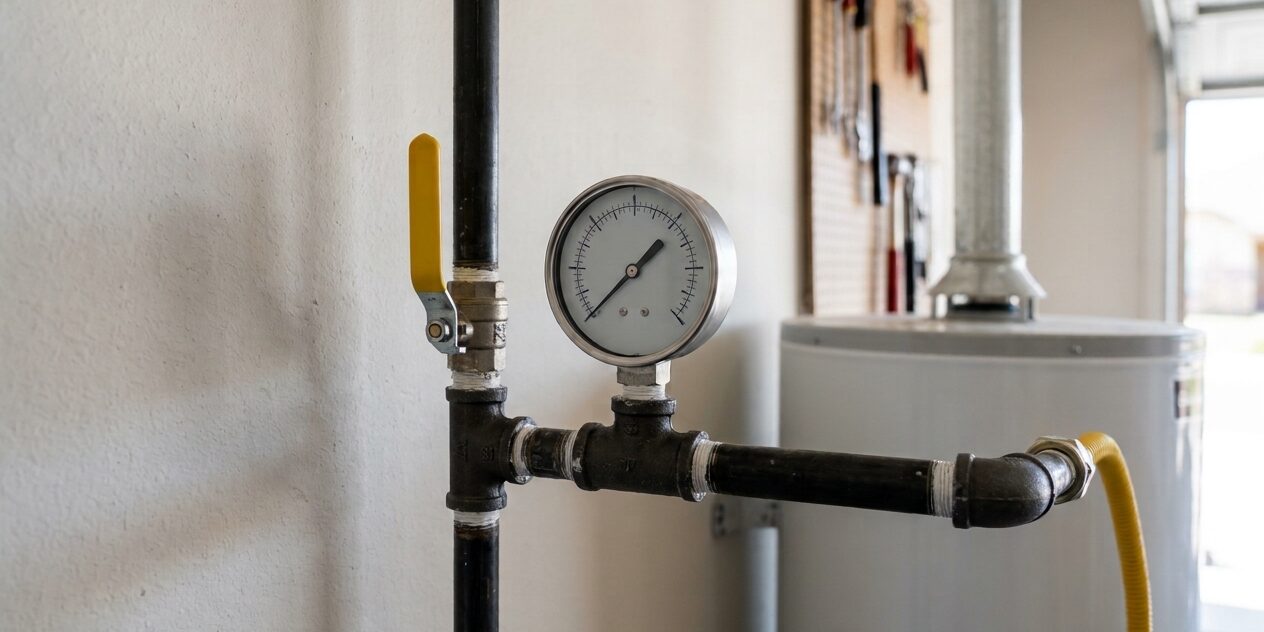
Gas line pressure is simply the force moving natural gas through your home’s piping and into your appliances.
Residential gas systems operate at relatively low pressure. Rather than measuring that pressure in pounds per square inch like a tire, gas professionals often use inches of water column, or in. w.c.
According to the Railroad Commission of Texas, household gas appliances typically operate at about 5 to 13 inches of water column, although the exact requirement depends on the appliance and system.
That is the pressure appliances use during normal operation. A gas line pressure test is different: plumbers temporarily pressurize the piping under controlled conditions to see whether the system can hold pressure without a drop.
How Long Does a Gas Line Need to Hold Pressure?
The exact test requirements depend on local code and the type of work being performed.
For example, the City of Odessa‘s residential plumbing inspection checklist requires gas piping to be tested at a minimum of 60 ounces of air pressure for at least 10 minutes with no pressure loss before final inspection.
That does not mean homeowners should attempt pressure testing gas pipework themselves. Gas pressure testing requires the proper equipment, isolation of the piping system, and knowledge of local requirements.
Why Is My Gas Line Not Holding Pressure?
If a gas piping system loses pressure during a test, there is an opening somewhere in the system that needs to be located. Common causes can include:
- A leaking fitting or connection: Threaded joints, valves, or appliance connections can develop leaks over time.
- Corrosion or damaged pipe: Aging metal pipe can weaken, rust, or develop small openings.
- Recent installation or repair issues: A connection may not have sealed properly after new gas piping or an appliance was installed.
- A damaged valve: A faulty or improperly positioned valve can prevent the system from holding pressure.
- Physical damage: Construction, shifting soil, or impact can damage buried or exposed gas piping.
A pressure drop tells the plumber that the system is not sealed properly, but it does not necessarily reveal where the problem is. The next step is to isolate sections of the gas piping and inspect the system to locate the leak or failed component.
Does Low Gas Pressure Mean I Have a Gas Leak?
Not always.
Low gas pressure at an appliance can have several causes, including a regulator problem, an issue with the utility supply, piping that is too small for the amount of gas being used, high demand from multiple appliances, or a leak somewhere in the system.
That is why gas pressure problems should be diagnosed rather than guessed. A licensed plumber can determine whether the issue is with the home’s piping, an appliance connection, a regulator, or another part of the gas system.
What Are the Signs of a Gas Leak?
A slow gas leak may not always be obvious, so homeowners should know the warning signs.
Watch for:
- A rotten egg or sulfur smell
- Hissing or roaring near a gas line or appliance
- Dead or dying vegetation over a buried gas line
- Bubbling in standing water outside
- An unexplained increase in gas usage
Natural gas is naturally odorless, so utilities add an odorant to make leaks easier to notice.
What Should I Do If My Gas Line Is Not Holding Pressure?
If the issue was discovered during a professional pressure test and there are no active signs of a gas leak, the system should remain out of service until a licensed professional locates and repairs the problem.
If you smell gas, hear hissing, see bubbling water or dying vegetation, or otherwise suspect an active leak, treat it as an emergency:
- Leave the building or area immediately.
- Do not turn lights, appliances, or electronics on or off.
- Call 911 and your gas utility from a safe location.
- Once the immediate hazard has been addressed, contact a licensed plumber to inspect and repair the gas line.
Do not attempt to repair a leaking gas pipe or perform your own pressure test.
Can a Gas Line Be Repaired After It Fails a Pressure Test?
In many cases, yes. The repair depends on where the leak is and the condition of the piping.
A plumber may be able to repair or replace a leaking fitting, valve, or isolated section of pipe. If the piping is heavily corroded or multiple sections are failing, a more extensive gas line replacement may make more sense.
After repairs are completed, the line may need to be pressure tested again to confirm that the system holds properly before it is returned to service.
Get Gas Line Problems Checked by I Fix Pipe
A gas line that will not hold pressure is not something to ignore, but it also does not automatically mean the entire gas system needs to be replaced.
We can inspect the piping, locate the source of the problem, explain your repair options, and help you determine the safest next step. If you have already received a recommendation for major gas line work, you can also request a free second opinion.
Contact I Fix Pipe today for gas line service in Odessa, Midland, and the Permian Basin. We are also available 24/7 for emergency plumbing situations.